Postcards


I may be a little old fashioned in this thinking, once you consider how easy it is to send a text and digital photo these days, I still love sending postcards. It started while looking through some of my dad’s old things. He had driven out to Expo 67 and along the way he had sent postcards back to his folks. Most of them were updates of where they were, what they’d seen, and he always ended the card with a code of how things, (mostly his travelling partners) were doing. If it was a good day, he’d sign “The horse is white”, a bad day, “The horse is black”.  It seems kind of silly, but as a little kid it was as funny to me to read as I’m sure it was for him to write. Postcards were a fun way to journal his trip, and for me, a fun way to relive a piece of his history, imagine, being an 18-year-old kid, on a cross country road trip, with a friend and your little brother.

When I got older, I started travelling, and one of my first major trips was a 9-month work exchange to the island of Tasmania in Australia. This was of course, before texting, and camera phones. It was quite expensive to send oversea calls, and with the time difference, I often found it quite difficult to catch up with everyone wondering how I was making out. We did have a fax machine. I know. I’m THAT old. And I would often write letters home and fax them, but I still loved sending the odd postcard home. My first ones often saw me signing off with the description of the colour of the horse as dad had originally done, but I added my own personal flair to them by drawing the Looney Tunes “Tasmanian Devil” by my name in full cyclonic action (it’s easier to draw cyclone squiggles with arms, legs and a tongue than the whole character) on every card.

After my grandparents passed away, I discovered a large collection of postcards in their things, and these, along with news of the day, also contained a history of our family. My great-grandfather moved to Piapot when there wasn’t much to the town, and as the town grew and was built, he would send home photo postcards to his relations back east. They would often mark the prominent buildings in town and label them on the card. As time passed, these cards were returned to the family. Now that these buildings are mostly gone, as well as the people who are able to remember where things were, this bit of history is priceless to me.

Since finding the postcards of my great grandparents, and grandparents I decided to start collecting old photo postcards. The images and history contained in them is quite interesting, and sometimes the information contained on the back can be fun and a bit of a mystery as well. There’s often a crop and weather report, and how Aunt So-and-So is doing, and occasionally a request about a sweetheart or friend left behind. In fact, sometimes the information on the back is almost as interesting as the photo on the front. One of the more interesting type of cards I’ve found are the old leather postcards. These cards were first made in 1903 mostly on soft deer hide with the image burned on. They were banned in 1907 because they jammed up the postage cancellation machines, though they were sold until 1910 as souvenirs.

My travelling has slowed a bit, having kids in school, a ranch to help run, and volunteer work have limited the time available to do it… stupid responsibilities… we do still find time to sneak away for the odd family vacation and while I always have my phone with me and send texts and pictures home or on Facebook, I can often be found poking around gift shops, looking for the tacky, touristy postcard, so I can send a note home and let everyone know “The horse is white”.

Payphones

Payphone.jpgI suppose it’s natural that as one ages, they start to miss “the good old days”. I don’t remember when I stopped buying cassette tapes, it just sort of happened. CDs were introduced to the market, and eventually they became the new standard, the same thing happened with records before that and now digital music is replacing the CD. I remember a time before the internet when you had to read a book to find out information. Google has almost rendered that obsolete as well. I remember when a 25” TV was so heavy it took two men and a team of horses to lift it!
I find I’m starting to fall behind the new technology. My kids come home talking about the latest app or gadget and I find myself doing “homework” after they’ve gone to bed, trying to catch up (and not to brag, but I’m still miles ahead of my wife in this department!). I’m not sure why this is the case, I guess part of it is, we get stuck in our ways. Our way has always worked in the past, so why change a good thing. Change is difficult as the best of times, and as we get older it seems to get harder.  Part of it is, we just lose interest. I know I’ve gotten much busier since I became a parent, and something had to be set aside, and often that was the newest and latest gadgets, but my kids sure know how to operate them. My son has recently gotten into digital animation. He is doing things on an iPad, that blows me away. It’s a far cry from what we were doing back in the 80’s, when we’d spend months copying code from a book to the desktop computer, and at the end, have a stick man move slowly from one side of the screen to the other, and we really thought we had accomplished something. I’m sure my grandkids will blow my kids’ minds with the things they are able to do in the future as technology progresses.

Every once in awhile, we’ll stumble across one of these “relics” and to my utter amazement, or more likely disbelief, my kids will have no idea what it is, or what the importance of the object once was. “Well before the internet, a cassette was how mommy and daddy used to listen to music” we explain to the kids gaze at us with mistrustful expressions of confusion. “No really son. It’s true. Stop looking at me like I’ve sprouted a third ear on my forehead. Yes, we carried around cases full of them. Yes, we REALLY used them to record music off the radio. No, I DON’T have time to explain what a radio is right now!”

A while ago we were on a road trip to visit my sister and stumbled across a payphone in the lobby of a restaurant. Of course, the usual questions ensued about why people needed them and how they worked, and the kids couldn’t fathom why people didn’t just use their cell phone to make calls “back then”, and once again I got the confused looks when I explained that cell phones hadn’t always been around, in fact the first cell phone was invented in 1973 and if they read daddy’s articles in the newspaper they would already know about it… but I digress. I realized I didn’t really know too much about payphones other than my personal use of them, so I thought I’d find out more about them.

William Gray was a Hartford Connecticut inventor. Previously his biggest claim to fame had been devising an inflatable chest protector for baseball catchers and umpires. One day, Gray’s wife fell ill and he needed to call a doctor, not having a home phone, William Gray ran to a nearby factory where he knew a telephone was, however, no one was willing to let him use it. He eventually found a good Samaritan with a phone, and his wife recovered, however it left him thinking of ways to prevent this scenario from happening to anyone else. His solution was the public telephone.

Gray’s first attempt was a bit of a failure. The design had a box that covered the mouthpiece of the phone that would slide away once a coin was inserted. The main problem was once the initial coin was inserted and the box moved, the caller could then make multiple calls. The other problem was that if the call was received at a public phone, the person receiving the call would also have to pay to talk.

After a few more attempts he finally came up with a relatively simple solution, a “coin-controlled apparatus” that used a small bell to signify the operator when a coin was deposited. He applied for and received a patent for his payphone in 1889. He then started the Gray Telephone Pay Station Company and, joined up with another inventor named George Long, and together, made a series of improvements on his earlier model.  These phones worked on an honour system, you made the call and when you were done, the operator told you what coins to deposit. The coins would hit a bell, creating a sound the operator could hear to determine if it was the correct amount.

As we all know, the honour system is fallible as not everyone is honest, and often calls would go unpaid for. In 1898 the first “pre-pay” payphone was put to use in Chicago, correct change had to be inserted before you could place your call. This type of phone would eventually become the standard for payphones around the world. As an interesting side note, the first mechanism to return the coins if the call didn’t go through wasn’t invented until 1909. I’m sure a lot of people were lamenting the post-call pay system for quite awhile if their call was missed!

By 1902 there were 81,000 telephones in the United States alone and that number had peaked at 2.6 million payphones in the U.S. in 1995. With the availability of cell phones increasing the payphone began a steady decline in use after that. In 2013, in all of Canada there were only 70,000 payphones still in operation, well below America’s numbers in 1902! However, also in 2013 the CRTC placed a moratorium on removing any more payphones, as they are still in use in emergencies and for those unable to afford a cell phone.  In an official report from the CRTC in 2015 they remarked “32 per cent of Canadians used a payphone at least once in the past year, and that they are used as a last resort in times of inconvenience and emergency.”

At some point, I’m sure someone will write an article about the last payphone ever used, but I’m kind of happy that it isn’t this one, and I hope someday, my kids will get to use one, even if it’s just to call mom and dad to say hello because the screen on whatever they are calling from at that point is broken. If they even still need a device to make calls at that point!!

Mother’s Day

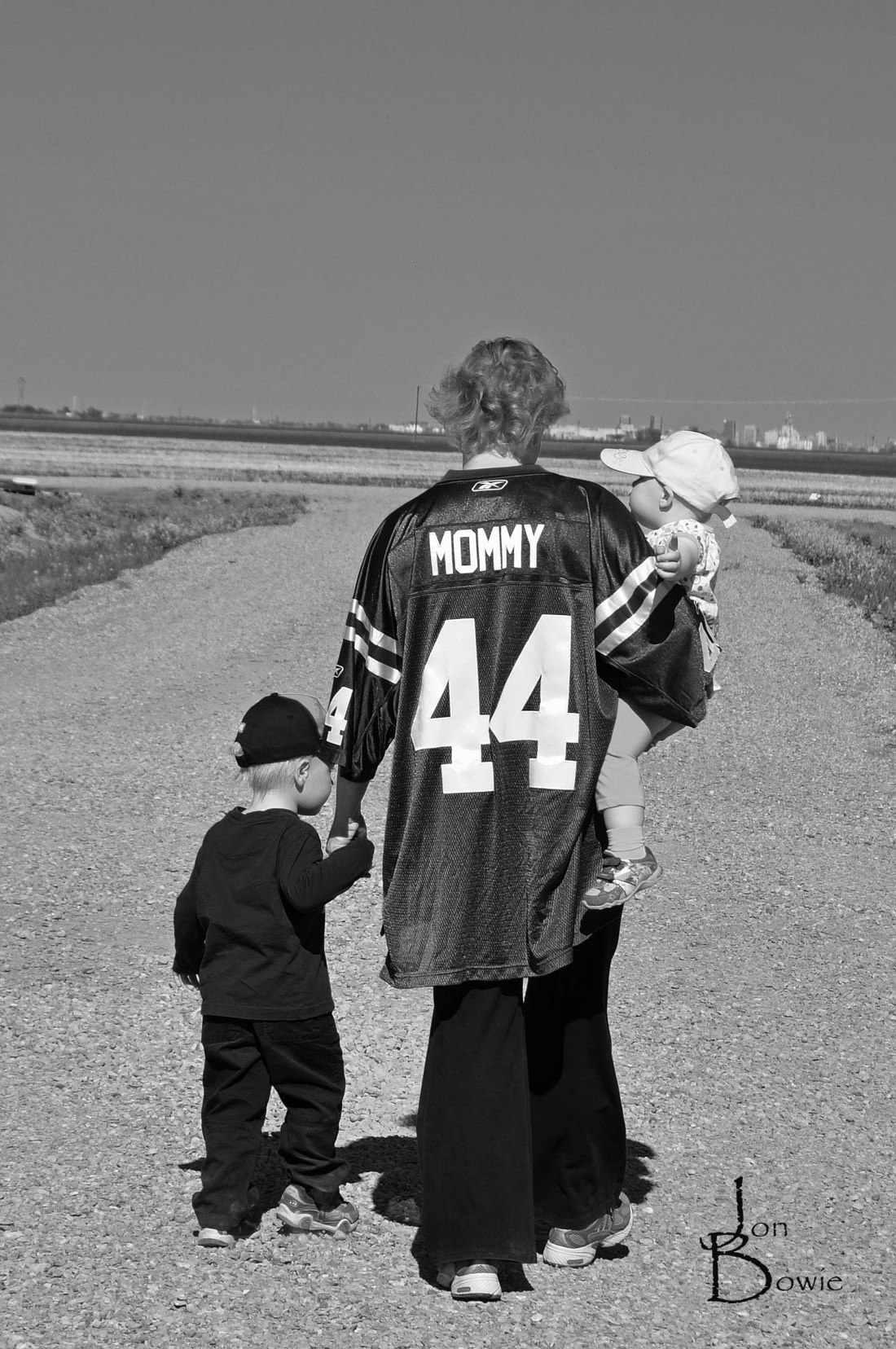
I freely admit, my wife and my mother often get shortchanged on Mother’s Day. It falls at a really awkward time of year for some of us in the ranching community. At the Bowie Ranch we are calving and fencing and starting to move cattle into their spring pastures. On top of all that activity, we also have to go to quite a few brandings during the month of May. Lots of our neighbours have cattle in community pastures, and they need to get all the calves tagged and branded so they can be moved. Unfortunately, that doesn’t leave me a lot of time to run to town to get a present, and sometimes, I’m not home to take them out for supper. They seem to take it in stride though. As long as I remember to kiss them goodbye and shout “I love you” as I’m rushing down the stairs, they put up with a tiny bit of neglect on the day. They realize marrying/raising a rancher isn’t always the romantic lifestyle described in dime novels and country songs. I don’t forget the day, and I make sure our kids don’t either, I’m just not sure a hand-drawn card from a 43-year-old man has the same allure it did when I was 4 (though the art work is shockingly similar),  they always smile, and give a hug and a kiss and say how thoughtful I was.  Mothers are just really special that way.

MothersDay

Calving

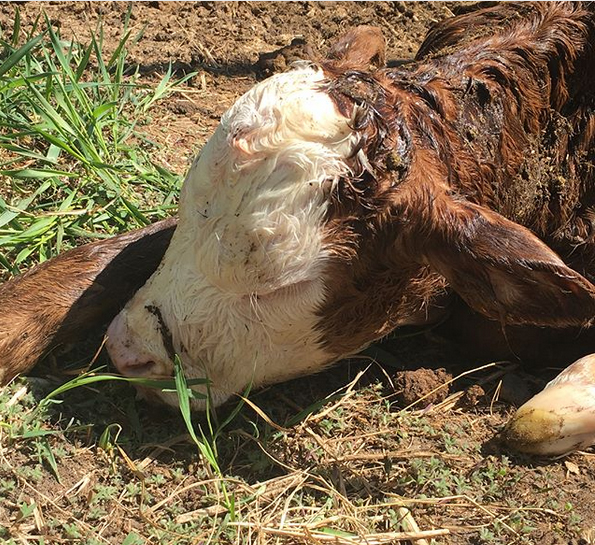
This year has been a tough one for ranchers in Southwest Saskatchewan. A very late spring meant many were calving in snowdrifts. Calves were constantly being brought inside to warm up and there were still losses if calves weren’t found fast enough. There are always the usual losses and the freaky losses, like the cow that had a heart attack while I was trying to pull a calf out of her resulting in the loss of both cow and calf. A common phrase around out place is “If you got Livestock, you’re gonna have dead stock” It’s perhaps not the kindest sentiment, however it is a good reminder that you can’t save every single one.

The weather has finally turned and the grass is turning green and it truly feels like the corner has been turned. It’s important when there is a year like this, that we remember the successes so we don’t get too discouraged and just quit. Yesterday was a GOOD day, I had to pull a calf out of a heifer… well… I’m not sure I HAD to, she may have had it on her own, but I’m a little gun shy this year. She was very calm, easy to chase, and the calf was an easy pull. Mother and baby are doing fine, and I noticed a definite spring in my step all day after the fact. Sometimes we are allowed to win, and that is a great feeling.000